
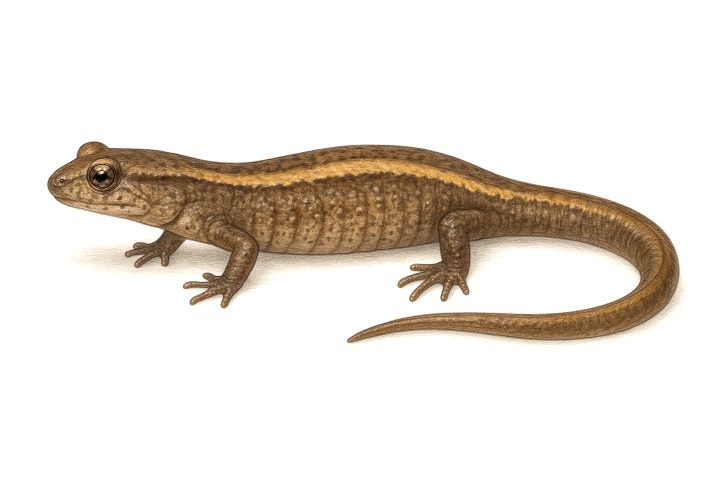
The Blue Ridge Dusky Salamander is a small, secretive amphibian that calls the cool, misty forests of the Appalachian Mountains home. It might not be flashy, but what it lacks in color, it makes up for in mystery. This salamander is part of a diverse group known for their sly, ground-dwelling habits and love of shady, rocky places. If you enjoy hiking through hardwood forests and flipping over rocks (carefully), you just might spot one.
Size & Physical Appearance
Blue Ridge Dusky Salamanders are on the smaller side—usually between 2.5 to 4 inches long. Their colors can range from dark gray to reddish brown, often with a slightly mottled or blotched pattern along the back and sides.
One hallmark feature is a light-colored stripe or line running from the eye to the back of the jaw. This isn’t unique to them, but it’s a good starting point for ID. Some individuals have faint, irregular spotting along the back, but overall, this species tends to look fairly plain—which helps it blend in with leaf litter and wet rocks.
Male and female salamanders of this species generally look similar, and juveniles resemble smaller versions of adults.
Habitat and Range
This salamander sticks to higher elevations in the Appalachian Mountains, mostly in the Blue Ridge region of Virginia and parts of North Carolina. You’ll find them in cool, moist forests—often near streams, seeps, or springs. But unlike many amphibians, they don’t actually live in the water.
Instead, Blue Ridge Dusky Salamanders tend to stay in damp microhabitats like underneath mossy rocks, logs, or the leaf layer on the forest floor. They avoid hot, dry, or exposed areas and are particularly fond of montane hardwood and spruce-fir forests.
Diet
In the wild, these salamanders are insectivores. They eat tiny invertebrates like ants, mites, beetles, springtails, and small worms. Basically, they eat whatever small critters they can catch in the leaf litter.
They hunt mostly at night, using their sticky tongues to snag prey, and may even climb onto low vegetation or rocks to search for a tasty bug or two.
Lifespan
In the wild, a Blue Ridge Dusky Salamander can live for 6 to 10 years, though that can vary depending on predation and environmental conditions. In captivity, they might live a bit longer, but they’re rarely kept as pets due to their specialized habitat needs and secretive nature.
Identification Tips
The Blue Ridge Dusky Salamander can be tricky to tell apart from its dusky salamander cousins. Here’s what to look for:
- Size: Usually smaller and stockier than similar species.
- Tail Shape: Tail is keeled (has a ridge) and typically less than half the total body length.
- Color: Generally dark with faint mottling—no bold stripe like the Eastern Red-backed Salamander.
- Jaw Stripe: Pale stripe running from the eye to the back of the jaw is visible but not always bright.
To be honest, figuring out exactly which Desmognathus you’re looking at can be tough. They’re infamous for looking alike and even interbreeding in some areas. If you’re trying to ID a salamander in the field, location can be a helpful clue—Blue Ridge Dusky Salamanders are only found in higher elevations of the Blue Ridge Mountains.
Fun Fact
Unlike many amphibians, the Blue Ridge Dusky Salamander doesn’t have lungs. Instead, it “breathes” through its skin and the lining of its mouth. That’s one reason it needs to stay moist all the time—dry skin would mean no oxygen exchange!
Quick Summary
If you’re wandering through a misty mountain forest in Virginia or North Carolina and spot a small, dark salamander hugging a cool, wet rock—it just might be a Blue Ridge Dusky. They’re not flashy, but they’re tough survivors, finely tuned to the chill and dampness of their mountain homes.
Keep an eye out, tread lightly, and always return cover objects gently—these little guys are part of what makes Appalachian forests so special.