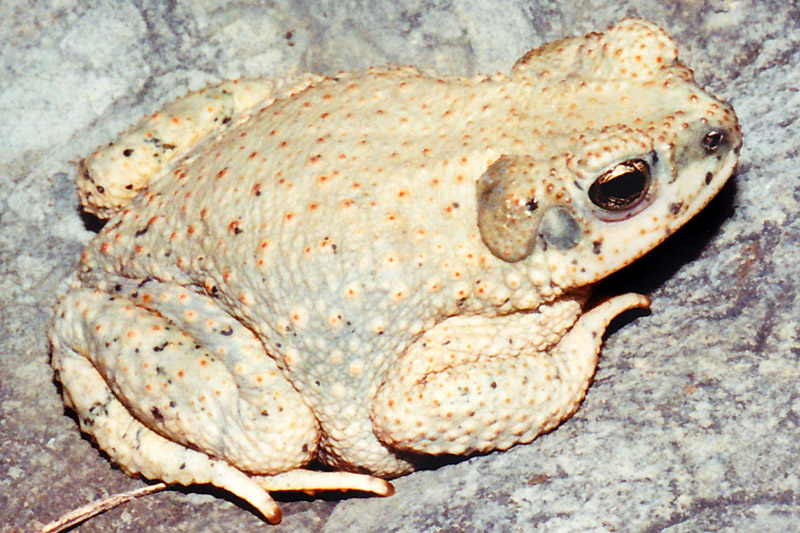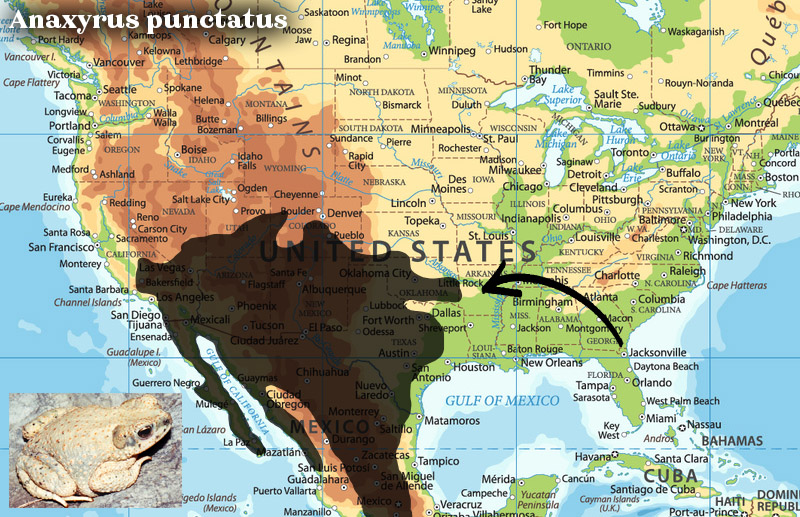
The Red-spotted Toad is a small, desert-loving amphibian with a speckled, almost artsy appearance. Found throughout the arid southwestern U.S., it’s known for its red or orange skin spots and its surprising ability to thrive in dry environments. If you’re exploring rocky canyons or desert creeks, there’s a good chance you’ve walked right past one of these little toads without even realizing it.
Size & Physical Appearance
These toads are on the smaller side, typically measuring about 1.5 to 3 inches in length. Their backs are usually light tan, gray, or olive with noticeable red or orange spots, especially vivid in younger individuals. Their bellies are pale and usually unmarked.
Compared to other toads, they have a more streamlined shape and a relatively flat head and body. Their skin is bumpy (as you’d expect from a toad), but the warts are smaller and more spread out than those of other species like the Western Toad. Males are typically smaller than females and develop dark throats during breeding season.
Habitat and Range
Red-spotted Toads are masters of desert survival. They live in arid and semi-arid areas, often in rocky canyons, washes, and desert streams. They prefer areas near intermittent water sources like seasonal pools and rain-filled creeks.
In the U.S., you’ll find them in parts of California, Nevada, Arizona, New Mexico, western Texas, and even southern Utah. They tend to live at elevations from below sea level up to about 6,000 feet, as long as there are temporary water sources nearby during breeding season.
Diet
Adults eat a variety of small insects and invertebrates — beetles, ants, spiders, and pretty much anything else they can fit in their mouths. They’re not picky eaters.
Tadpoles mainly graze on algae and organic material in shallow pools. One interesting thing: Red-spotted Toads tend to feed at night to avoid the intense desert heat during the day.
Lifespan
In the wild, these toads usually live 6 to 9 years. In captivity, if properly cared for, they may live even longer — sometimes up to 12 years. Their lifespan is closely tied to rainfall patterns, since breeding success depends on temporary desert pools.
Identification Tips
It’s easy to confuse a Red-spotted Toad with some of the other small desert toads, especially the Western Toad or young Woodhouse’s Toad. Here’s how to tell them apart:
- Red or orange spots — these are usually your best clue. They’re unique to this species and stand out on a tan or gray background.
- Long, narrow snout — compared to the more rounded faces of other toads.
- Small parotoid glands — that’s the oval-shaped lump behind the eyes. In Red-spotted Toads, these are small and about the same size as the eye, while other toads often have larger glands.
- More flattened body shape — especially noticeable when compared to bulkier toads.
When in doubt, look for those red spots — they’re the species’ signature feature.
Fun Fact
Red-spotted Toads have a neat trick for surviving dry desert conditions — they can quickly breed in temporary rain pools that last only a few days. Their tadpoles develop extremely fast, sometimes turning into toadlets in as little as 6 days! It’s one of the fastest amphibian life cycles in North America.
In Summary
The Red-spotted Toad is a desert specialist that thrives in places most amphibians couldn’t handle. With its small size, red-speckled skin, and ability to survive harsh, dry conditions, it’s a fascinating species to look out for if you’re in the American Southwest. Keep your eyes out for them after summer monsoons — that’s when they’re most active and most vocal!
Let us know if you’ve spotted one — and if you’re not sure it was a Red-spotted Toad, feel free to send a photo!