
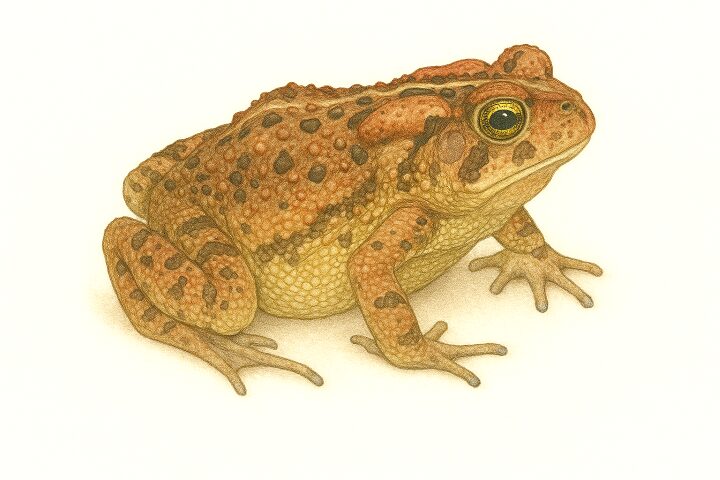
If you’ve ever walked through the southeastern U.S. on a warm, damp evening, chances are you’ve crossed paths with the Southern Toad. These little toads are common but full of character. With their bumpy skin and hearty “trill” calls, they’re some of the most charming night sounds in spring and summer.
They may not wear flashy colors, but don’t let their plain looks fool you. Southern Toads are survivors, well-adapted to everything from sandy forests to neighborhood gardens.
Size & Physical Appearance
Adult Southern Toads typically grow between 1.5 to 4 inches long. They’re stocky with dry, warty skin — which is pretty classic toad fashion.
Their coloring can vary quite a bit. Most are brown, reddish-brown, or grayish, often with darker blotches on the back. Some individuals have a bit of orange or rust coloring. The belly is usually pale and unmarked.
One of the easiest ways to recognize a Southern Toad is by looking at the area behind its eyes. They have large, oval-shaped parotoid glands (those raised bumps) and a pair of small knobs or “cranial crests” on top of their heads. These crests have a characteristic shape that helps tell them apart from similar toads.
Males are usually smaller than females and develop darker throats during breeding season.
Habitat and Range
Southern Toads are true creatures of the American Southeast. Their range runs from eastern Louisiana through Florida and up into southeastern Virginia. They’re found in:
- Sandhills
- Open pine forests
- Coastal plain woodlands
- Backyards, parks, and even city lots
They like places with loose, sandy soil where they can easily burrow during the day or dry weather. While they’re not picky, they prefer habitats that are warm and moist — especially during breeding season.
They’re typically found at low elevations, but can show up in hillier inland areas too.
Diet
Southern Toads are insectivores, which means they spend their nights hunting small invertebrates. This includes:
- Ants
- Spiders
- Crickets
- Beetles
- Caterpillars
They use a quick flick of their sticky tongue to snag prey. If you’re a gardener struggling with pests, consider a Southern Toad a helpful neighbor.
Lifespan
In the wild, Southern Toads typically live around 5 to 10 years, though some have been known to survive longer. In captivity, with good care, they may live up to 12 or more years.
Their biggest threats are habitat loss, cars, pollution, and predation — both from wild animals and domestic pets like cats.
Identification Tips
Southern Toads can look a lot like other toads in the region, especially the American Toad (Anaxyrus americanus) and the Fowler’s Toad (Anaxyrus fowleri). Here are a few ways to tell them apart:
- Southern Toads usually have a pair of short, bony ridges (cranial crests) that end in distinct knobs.
- They tend to have fewer warts per dark blotch on their back compared to Fowler’s Toads.
- Listen for the call. Southern Toads make a high-pitched trill that lasts several seconds — kind of like a sustained, vibrating “whir.”
Observation tip: If you’re near loose sandy soil in the Southeast and hear a long, musical trill at night during the warmer months, there’s a good chance it’s a Southern Toad.
Fun Fact
Southern Toad tadpoles have a neat trick — they often school together in big swarms in shallow water. This helps them avoid predators by blending in and moving as one. It’s like having built-in crowd protection!
Also fun: even though they’re land toads, they’re surprisingly good swimmers when they need to be — especially during breeding time.
Whether you’re a student exploring local wildlife, a parent on a backyard scavenger hunt, or just a nature lover out for a walk, keep an eye out for these humble amphibians. The Southern Toad might not be the flashiest frog on the block, but it’s a resilient, adaptable creature with a big voice and an important role in our ecosystems.
If you see one, give it a moment to hop on its way — and consider yourself lucky to spot one of the Southeast’s most classic amphibians.