
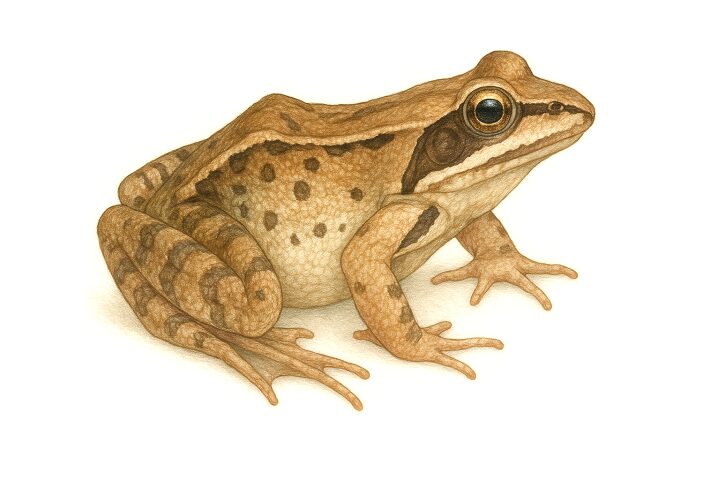
The Wood Frog is one of North America’s most cold-hardy amphibians—and that’s saying something. This little frog has one of nature’s coolest (literally) tricks: it can survive being frozen solid in winter and come back to life in spring. Seriously. If you’re hiking in a forest and hear a raspy “quack” sound coming from a wet area, chances are there’s a wood frog nearby.
Size & Physical Appearance
Wood frogs are small to medium-sized amphibians. Most adults measure around 1.5 to 3.25 inches long. They vary a bit in color—some are tan, others more reddish or brownish—but they all wear the same signature accessory: a dark “robber’s mask” stripe that runs from the nose, across the eye, and down behind the ear. That simple marking is a big clue in identifying them.
Their bellies are pale, often whitish or cream-colored. Males tend to be smaller and may have dark thumbs during breeding season, which helps them cling to females during mating. Juveniles look like miniature versions of adults but may be a bit more drab until they mature.
Habitat and Range
As their name hints, wood frogs love the woods. They’re commonly found in forested areas with seasonal pools, which are temporary bodies of water that fill with snowmelt and rain in spring. These frogs are especially fond of vernal pools because they usually lack fish, which means less danger to their tadpoles.
The wood frog is one of the most widespread frogs in North America. You’ll find them in a big stretch of the country—from the Northeast and Upper Midwest down into the Appalachians, and even as far west as Alaska. Some populations live at elevations over 3,000 feet, particularly in mountainous regions.
Diet
Adult wood frogs are insectivores. Their menu includes insects, spiders, worms, and other small invertebrates. They’re opportunistic feeders, snapping up anything small enough to fit in their mouths. Tadpoles, on the other hand, start out feeding on algae and decaying plant matter before shifting toward more active foraging as they grow.
Their diet isn’t especially strange, but the fact that they do all their major feeding in just part of the year—since they freeze over the winter—is impressive in its own right.
Lifespan
In the wild, wood frogs typically live about 3 to 5 years. That might not sound long, but considering the freezing and thawing they go through each year, it’s pretty remarkable. In captivity, they can live a bit longer if kept in ideal conditions, though they’re less commonly kept as pets than some other frog species.
Identification Tips
Wood frogs can look a bit like American toads or other small brown frogs from a distance, but here’s how to tell them apart:
- Look for the dark eye mask. It’s one of the most distinctive features.
- Their backs are relatively smooth, with only a few small bumps—not warty like toads.
- They often have a light-colored stripe along the upper jawline.
- Listen for the call—it’s more of a duck-like quack than a croak or trill.
Spring is the best time to spot them. Right after the snow melts, they emerge before most other frogs and make a bee-line to temporary woodland pools to breed.
Fun Fact
Wood frogs are basically amphibian snowbirds—except instead of flying south, they turn into frogsicles. During winter, they can freeze solid, with no heartbeat or brain activity, and then thaw out in the spring like nothing ever happened. They do this by flooding their bodies with glucose, which acts like a natural antifreeze. It’s one of the few vertebrates on Earth with this superpower.
Whether you’re a backyard nature observer or hiking through the woods, spotting a wood frog is always a treat. They’re a great reminder of how resilient and surprising wildlife can be, even in the chilly corners of North America.