
Jefferson Salamander

(Ambystoma jeffersonianum)
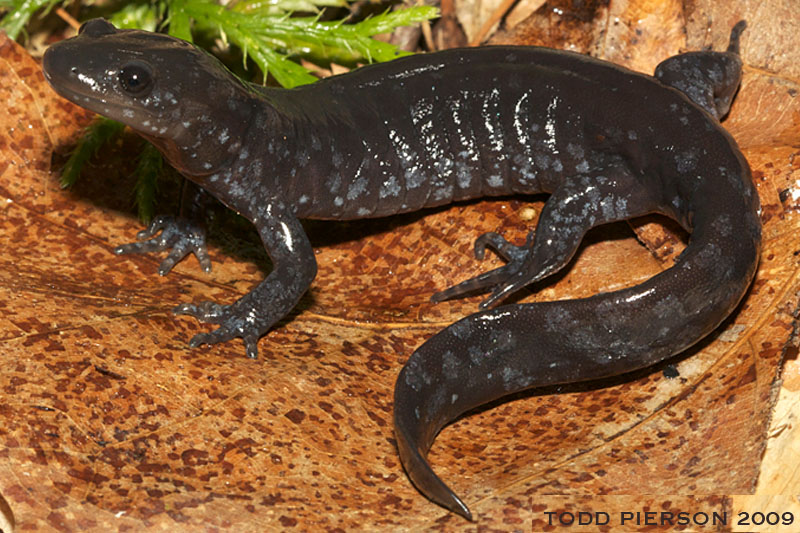
Jefferson Salamander (Ambystoma jeffersonianum) Illustration

IUCN Conservation Status: Least concern (LC)

Last updated: August 25th, 2015

View on UICN →

Common name(s):Jefferson Salamander
Binomial name:Ambystoma jeffersonianum
Location(s): The United States
Size:4.5 to 7 inches

Taxonomy

Kingdom:

Animalia (Animal)

Phylum:

Chordata (Chordates)

Class:

Amphibia (Amphibian)

Order:

Caudata (Salamanders)

Genus:

Ambystoma

More About the Jefferson Salamander

If you’re walking through a quiet, damp forest at night in early spring, you might be lucky enough to catch a glimpse of the elusive Jefferson Salamander (Ambystoma jeffersonianum). These mole salamanders spend most of their lives hidden underground and only emerge for a short time to breed. They’re not flashy, but their secretive habits and unique breeding biology make them a fascinating find for any amphibian enthusiast.

Size & Physical Appearance

Jefferson salamanders are considered medium to large within the salamander world. Adults typically measure between 4 to 7 inches long, including their tail.

Their bodies are slim and dark gray to brownish gray, sometimes with faint blue flecks along the sides and limbs—these are more noticeable in younger salamanders. Unlike some other spotted or striped salamanders, Jeffersons have a very plain, almost ghostly look, which helps them blend into leaf litter.

Males tend to be slightly slimmer and longer-tailed than females, especially during breeding season. Juveniles look similar to adults but are smaller and often have more pronounced blue spots.

Habitat and Range

Jefferson salamanders live mostly in the Appalachian foothills, the Northeast, and parts of the Midwest, mainly in deciduous or mixed hardwood forests. They prefer moist, wooded areas with rich soils that are easy to burrow into.

You’ll find them in states like Ohio, Pennsylvania, New York, Indiana, and parts of New England. They’re especially tied to elevated wooded areas with temporary woodland pools nearby—these are critical breeding sites.

They stay underground most of the year, coming up only to breed in early spring, usually shortly after the first warm rains melt the snow.

Diet

Jefferson salamanders aren’t picky eaters. They’re night hunters, feeding on a variety of small invertebrates they find underground or on the forest floor. Their diet includes:

  • Earthworms
  • Insects and insect larvae
  • Spiders
  • Small snails and slugs

Because they spend so much time underground, their food sources come mostly from below the leaf litter or just beneath the soil surface.

Lifespan

In the wild, Jefferson salamanders can live for around 6 to 10 years, though some individuals may reach even greater ages if conditions are right. In captivity, with no predators and steady conditions, they might live a bit longer, but this species isn’t often kept as a pet because of its specific habitat needs and protected status in some areas.

Identification Tips

Jefferson salamanders often get mixed up with Blue-spotted Salamanders and the Small-mouthed Salamander—especially because they can hybridize with some of them.

Here are a few ways to tell them apart:

  • Jefferson Salamanders are slender and long-limbed, with a subtle or absent spotting pattern.
  • Blue-spotted Salamanders are smaller and have brighter blue spots all over their body and tail.
  • Spotted Salamanders are much bulkier with distinctive yellow or orange spots on a black background.

Also, be aware that some Jeffersons in hybrid zones might have more pronounced blue spotting or unusual markings, which can confuse things even more.

Fun Fact

Jefferson salamanders are part of a fascinating group of salamanders that hybridize to create all-female lineages—yes, really! These hybrid females use sperm from related males (like Jefferson or Blue-spotted Salamanders) to trigger egg development, but the sperm’s DNA isn’t always incorporated. It’s a strange reproductive system called kleptogenesis, and it’s still being studied by scientists.

So next time you’re exploring the woods in springtime, keep an eye on those ephemeral pools and damp trails—you might spot one of North America’s more mysterious amphibians taking its once-a-year walk to breed. Just remember: look, don’t touch. These quiet little creatures are better off as wild neighbors than handled friends.

Quick Recap

  • Common Name: Jefferson Salamander
  • Scientific Name: Ambystoma jeffersonianum
  • Size: 4 to 7 inches
  • Color: Gray to brown with subtle blue flecks
  • Range: Northeastern and Midwestern U.S. forests
  • Diet: Worms, insects, and other small invertebrates
  • Habits: Underground most of the year, emerges in early spring
  • Cool Trait: Part of a group that can reproduce using sperm without mixing genes

Looking for more salamanders? Check out our full guide to U.S. amphibians and see if you’ve got any backyard visitors you never knew about!